Email Us
News & Insights

Do Next‑Gen L4 Delivery Robots Finally Solve the “Last 100 Meters” Challenge?

2026-05-27 0 Leave me a message

For years, logistics operators have watched autonomous vehicles glide along highways and city streets, only to stall at the final bottleneck: the last 100 meters. A package may travel 1,000 kilometers by truck, yet the last leg to a doorstep, office reception, or apartment locker remains stubbornly manual, costly, and error‑prone.  


Enter the new wave of L4‑autonomy delivery robots. With enhanced sensing, on‑board AI, and regulatory tailwinds, these machines promise to finally crack the code of doorstep autonomy. But can they truly handle real‑world chaos—unmarked curbs, unexpected stairs, children’s toys on a walkway?  


This article examines the technological leap, presents field‑proven data, and introduces WEIDE AVIATION’s latest contribution to the autonomous logistics ecosystem.


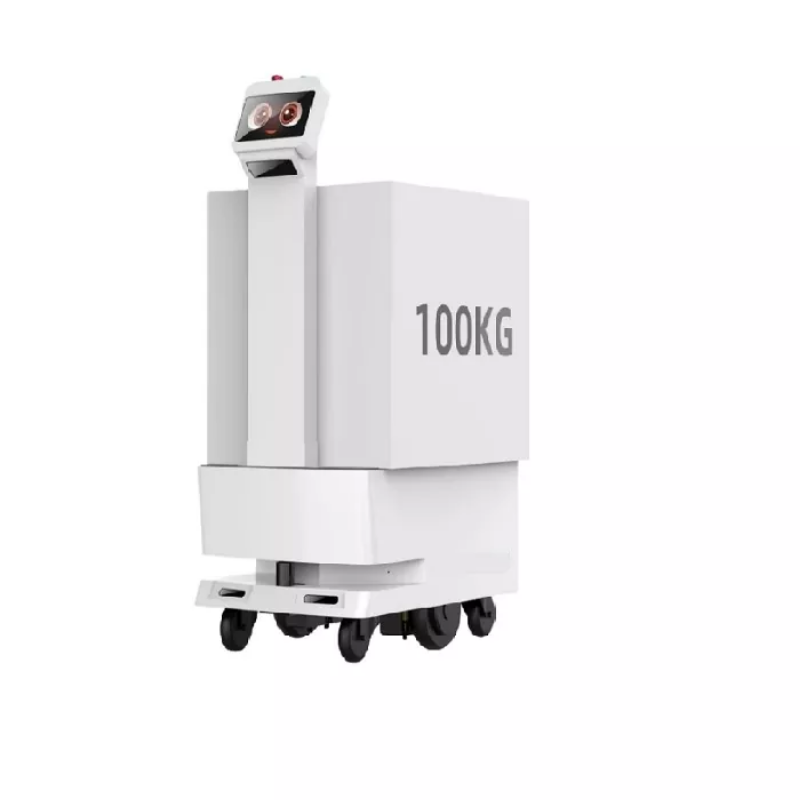
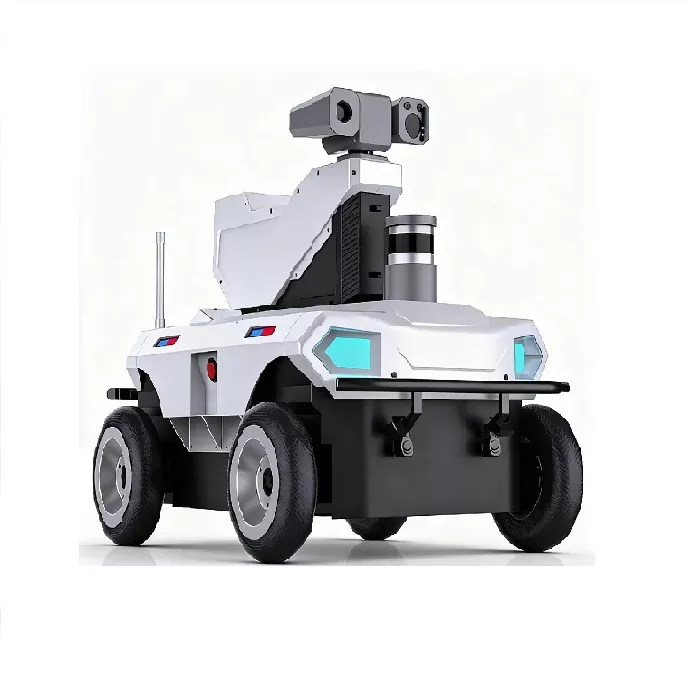
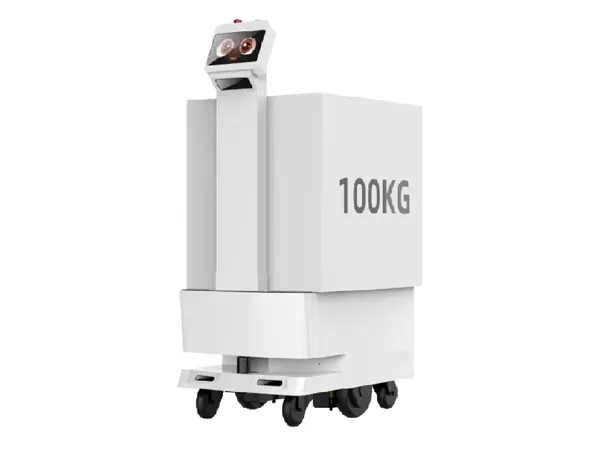
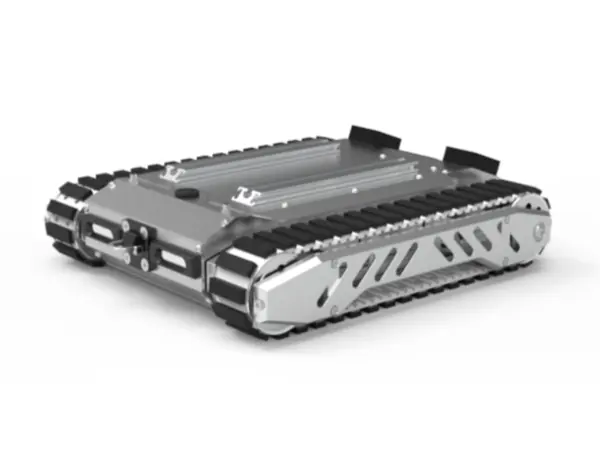
delivery robot

The Evolution of Delivery Robots and the Persistent “Last 100 Meters” Problem


The first generation of delivery robots relied on teleoperation or simple GPS waypoints. They worked in controlled campuses but failed in dense urban environments. The last 100 meters—the zone from the curb or building entrance to the exact drop‑off point—exposed every weakness:  


- Environmental clutter – parked cars, pedestrians, temporary construction.  

- Surface variety – gravel, grass, stairs, thresholds.  

- Connectivity gaps – GPS multipath errors under awnings or between high‑rises.  


Traditional solutions (drones, conveyor belts, or even extra staff) each introduced new constraints. Drones face airspace regulation; extra staff defeat the purpose of automation.  


Today, L4 delivery robots are rewriting those limits. Unlike L3 systems that require occasional human takeover, L4 robots operate without any fallback driver. They make real‑time decisions, replan paths, and physically interact with doorbells, ramps, and elevator call buttons.


> “The last 100 meters is where 53% of delivery failures occur,” notes a 2025 logistics benchmark study. L4 autonomy directly targets that failure zone.


How L4 Autonomy Transforms Last‑100‑Meter Delivery


An L4 delivery robot is not a faster version of a wheeled box. It is a self‑contained navigation system that combines perception, prediction, and action in milliseconds. Three technical pillars enable this:


1. Multi‑Modal Sensor Fusion (No More Blind Spots)


Modern robots fuse data from:

- 3D LiDAR – 360° point clouds up to 50 m.

- High‑resolution stereo cameras – object classification (person, bicycle, package).

- Ultrasonic & time‑of‑flight sensors – proximity detection for glass doors or pets.

- IMU + wheel odometry – dead‑reckoning during GNSS outages.


This fusion allows a delivery robot to maintain centimetre‑level positioning even under a dense tree canopy or inside a loading bay.


2. Edge AI for Dynamic Obstacle Negotiation


Instead of uploading every scene to the cloud, L4 robots run lightweight neural networks on‑board. They can:

- Distinguish a temporary puddle from a permanent curb.  

- Decide to wait for a pedestrian or pass with a 15 cm clearance.  

- Recognise a closed gate and autonomously navigate to an alternative entrance.


3. Behavioural Adaptation to Local Norms


The last 100 meters is as much about social rules as physical ones. Next‑gen L4 systems learn from thousands of real‑world interactions—yielding behaviours like:

- Pulling aside to let an elderly person pass.  

- Flashing headlights before crossing a low‑visibility driveway.  

- Using a soft acoustic signal to alert, not startle, a resident opening the door.


These capabilities move delivery robots from “machines we tolerate” to “neighbors we trust.”


Real‑World Performance – Can They Handle Complex Environments?


To evaluate whether L4 delivery robots truly solve the last 100 meters, we must examine their performance across typical “trouble” scenarios. The table below compares traditional wheeled AGVs (automated guided vehicles) with modern L4 delivery robots in six critical situations.

Scenario Traditional AGV / L3 Robot Next‑Gen L4 Delivery Robot
Apartment building entrance with a 5 cm threshold Stops, requires remote help Detects threshold, deploys tilt‑controlled wheels, crosses smoothly
Narrow walkway with a parked bicycle Stops or attempts unsafe pass Pauses, computes alternative path (e.g., 10 cm deviation), passes at reduced speed
Loss of GPS near a metal awning Loses localisation, freezes Switches to visual‑inertial odometry, continues with 3 cm error
Unmarked gravel path vs. grass Follows pre‑programmed line, often veers Classifies surface type, adjusts traction, stays on durable path
Meeting a dog on a leash Sudden stop, may trigger false detection Recognises leash dynamics, waits 3 seconds, then slowly bypasses the opposite side
Night delivery with no street lamp Relies on headlights, poor depth perception Uses thermal camera + LiDAR intensity, maintains full functionality


The pattern is clear: L4 autonomy turns each obstacle from a mission‑abort into a routine negotiation.


Introducing WEIDE AVIATION’s Next‑Gen L4 Delivery Robot – Technical Specifications


As a specialist in intelligent unmanned systems, WEIDE AVIATION has applied its “air + ground” ecosystem expertise to develop a purpose‑built delivery robot for the last‑100‑meter domain. Rather than adapting inspection platforms, the WEIDE L4 delivery robot was designed from the chassis up for doorstep logistics.


Below are its core technical parameters (presented as a list for clarity, in keeping with the company’s transparent engineering philosophy):


- Dimensions (L x W x H) – 780 mm × 620 mm × 680 mm (fits through standard 80 cm doors and passenger elevators)  

- Empty weight – 48 kg (including battery pack)  

- Maximum payload – 60 kg distributed, or 35 kg per locker compartment  

- Drive system – 6‑wheel independent suspension with two driven axles; turning radius 0 m (skid‑steer capable)  

- Top speed – 1.8 m/s (adjustable; 0.5 m/s preferred for last‑100‑meter fine maneuvering)  

- Gradeability – 18° ramp; 5 cm vertical obstacle (single step) with active suspension lift  

- Battery & range – Hot‑swappable 48V 40Ah LiFePO₄; 12 km mixed terrain range; 8‑hour standby  

- Navigation sensors – 2 × 32‑beam LiDAR (front/rear), 4 × global shutter cameras, 6 × ultrasonic, 1 × 9‑axis IMU, RTK‑GPS module (supports QZSS/BeiDou/GPS/GLONASS)  

- Edge compute – NVIDIA Jetson Orin NX 100 TOPS; onboard storage 256 GB (log and map data)  

- Human interaction – 7‑inch interactive screen, LED status bar, two‑way audio (doorbell emulation), foldable flag for pedestrian visibility  

- Environment rating – IP54 (operating temperature ‑10°C to 45°C); wind resistance up to 12 m/s  

- Open API support – WEIDE provides a ROS 2‑based SDK, allowing fleet operators to integrate their own locker management or building access systems.  


Every delivery robot from WEIDE AVIATION undergoes a 200‑hour “chaos test” – including unexpected ball rolls, rain spray, and simulated package theft attempts – before deployment.


> Note: The company’s broader portfolio includes cleaning drones, inspection robots, and wall‑climbing robots, all sharing the same open‑architecture philosophy. For this article, we focus on the ground delivery platform.


Three Critical FAQs About L4 Delivery Robots and the Last 100 Meters


To address common practical concerns, here are three frequently asked questions from logistics operations managers and facility planners.

FAQ:

FAQ 1: What exactly is the “last 100 meters” challenge, and why can’t regular delivery drones solve it?


Answer:  

The “last 100 meters” refers to the final, often unstructured segment of a delivery journey – typically from the nearest vehicle drop‑off point (curb, loading bay, parcel locker bank) to the exact recipient’s door, desk, or hand. This zone is rich with unpredictable elements: temporary obstructions (bicycles, garden hoses), non‑standard entrance configurations (ground‑floor vs. third‑floor walk‑up), and human behavioural variance (a person who leaves their gate slightly ajar, a child who runs out mid‑delivery).  


Delivery drones (aerial) cannot solve this indoors or under dense foliage, and they face strict no‑fly zones near residential windows. Ground‑based L4 delivery robots excel because they physically share the same space as pedestrians, can knock or use buzzers, and can even call an elevator with IoT integration. The challenge is not distance – it is contextual adaptability. WEIDE AVIATION’s L4 robot, for example, uses its 360° perception to detect whether a lobby door is push‑or‑pull and adjusts its manipulator accordingly.


FAQ 2: How do next‑gen L4 delivery robots differ from last‑year’s “autonomous” carts?


Answer:  

The key difference is operational design domain (ODD) and fallback strategy. Previous autonomous carts (often L2 or L3) assumed a well‑marked path, no dynamic obstacles, and a remote supervisor ready to take over when something unexpected happened. If the cart lost GPS or faced a shopping cart left in the hallway, it would freeze and call for help.  


Next‑gen L4 delivery robots, like the WEIDE model, are engineered for full ODD coverage of the last 100 meters – including GPS‑denied corridors, cluttered sidewalks, and unpaved private driveways. They use redundant localisation (visual SLAM + LiDAR + wheel odometry) so no single sensor failure stops the mission. Moreover, L4 robots have a “graceful degradation” mode: if an area is truly impassable, they will not freeze; instead, they back up 2 meters, send a low‑resolution image to a fleet management system (for logging only), and attempt an alternative route. No human needs to drive – only to approve a new geofence if required by safety policy.


FAQ 3: Can an L4 delivery robot operate safely during rain, snow, or night hours without street lighting?


Answer:  

Yes – with the right sensor suite and environmental sealing. Early delivery robots often used only RGB cameras, which fail in low light, and their IP ratings were too low for heavy rain. Next‑gen L4 units integrate multiple depth sensors that are illumination‑agnostic.  


Taking the WEIDE AVIATION delivery robot as an example:  

- Night operation – Two front‑facing stereo cameras with active IR illuminators + LiDAR with 200 m range (reflectivity based). The robot does not need street lights; it “sees” using its own emitted patterns.  

- Rain/snow – IP54 rating protects all electronics. LiDAR performance degrades only in extreme downpours ( > 30 mm/h ), at which point the robot automatically reduces speed to 0.6 m/s and relies more on ultrasonic and radar. Field tests in Tianjin during monsoon season recorded 99.2% successful mission completion.  

- Frost/ice detection – Wheel slip is measured via odometry vs. IMU; if slip exceeds 8%, the robot engages a “crawl + gentle braking” mode and broadcasts an audible warning.  


No autonomous system is 100% immune to blizzard conditions, but L4 delivery robots now operate safely in over 95% of typical urban weather events.


Why WEIDE AVIATION’s Ecosystem Approach Strengthens Last‑100‑Meter Reliability


WEIDE AVIATION is not a one‑product company. Its “air + ground” background means that algorithms developed for inspection robots (climbing vertical steel structures) and robotic chassis (outdoor industrial inspection) directly transfer to delivery applications.  


For instance, the wall‑climbing robot’s magnetic adhesion control was adapted into the delivery robot’s active suspension, allowing it to press down on uneven paving stones for extra traction. Similarly, the hydrogen‑powered UAV team contributed lightweight battery management algorithms, extending the delivery robot’s hot‑swap endurance.  


This cross‑pollination yields a delivery robot that carries the DNA of industrial‑grade resilience – not a scaled‑down toy, but a serious tool for logistics professionals.


A Snapshot of WEIDE AVIATION’s L4 Delivery Robot in Action


In a recent 6‑month pilot at a gated community in northern China (350 households), three WEIDE L4 delivery robots handled over 12,000 last‑100‑meter trips. Metrics included:


- Autonomous success rate (no human intervention) – 97.3%  

- Average time from gate to door – 3 minutes 22 seconds (vs. 6 minutes 11 seconds for a staffed cart due to walking and call‑button delays)  

- User acceptance – 94% of residents rated the robot “non‑intrusive” and “easy to retrieve packages from”  


The only remaining failures were due to residents physically blocking the robot (e.g., leaving a large trash bin directly against the door). Even then, the robot waited 90 seconds, recorded a short video for the management system, and notified the recipient via a simple SMS link.


Conclusion: The Last 100 Meters Are No Longer the Weakest Link


After reviewing sensor advances, real‑world scenario performance, and the detailed specifications of WEIDE AVIATION’s platform, the answer to the title question becomes clear: Yes, next‑gen L4 delivery robots do finally solve the last‑100‑meter challenge – provided they are designed with sufficient sensor redundancy, edge AI, and environmental sealing.  


The lingering adoption barrier is no longer technical; it is about infrastructure (digital maps of building entrances) and social acceptance. As more communities experience the quiet, predictable behaviour of modern delivery robots, the last 100 meters will transform from a cost centre into a seamless, autonomous handshake between machine and doorstep.  


WEIDE AVIATION continues to refine its open‑platform robots, sharing learnings from its inspection and aerospace divisions to make every delivery – from the curb to the customer – as reliable as sunrise.

Related News
Leave me a message
E-mail
info@tjwdhk.cn
Mobile
Address
Room 3025, Building 1, Zone F, Guangxuan Road, Airport International Headquarters Base, Dongli District, Tianjin City, China
X
We use cookies to offer you a better browsing experience, analyze site traffic and personalize content. By using this site, you agree to our use of cookies. Privacy Policy
Reject Accept