Email Us
News & Insights

Industrial BLDC Motors: Performance Advantages, Key Applications and Custom Solutions for Modern Robotics

2026-11-12 0 Leave me a message

Industrial BLDC Motors: Performance Advantages, Key Applications and Custom Solutions for Modern Robotics

As global demand for intelligent automation accelerates, industrial brushless DC (BLDC) motors have emerged as the foundational power solution for mobile robotic systems. Industry-wide market analysis shows BLDC motors hold over 65% of the global robotic DC motor market share, driven by their superior efficiency, durability and controllability across logistics, manufacturing and outdoor service scenarios. For engineers, procurement teams and system integrators searching online, the most common questions center on real-world performance, application suitability, selection criteria and customization options. This article breaks down these core topics with verified technical and market facts, to help buyers make informed decisions for AGV, robot chassis and robotic lawn mower projects.

Why BLDC Motors Are the Standard Choice for Robotics

The answer lies in three measurable performance differences that directly impact total cost of ownership. First, energy efficiency: industrial BLDC motors achieve 85–92% energy conversion efficiency, compared to 60–75% for traditional brushed motors. For battery-powered mobile robots such as AGVs and smart lawn mowers, this translates directly to longer operating time per charge and reduced energy costs over the product lifecycle.

Second, extended service life: since BLDC motors eliminate mechanical brushes and commutators, there is no friction wear on conductive components. Under normal operating conditions, industrial BLDC units deliver 10,000 to 20,000+ hours of continuous service, with bearing maintenance as the only routine upkeep requirement. This is a critical advantage for 24/7 logistics automation systems where unplanned downtime creates significant operational losses.

Third, precision control and low noise: electronic commutation enables accurate speed and torque regulation, supporting smooth startup even under full load. Typical operating noise levels range from 48–55 dB, making BLDC motors suitable for office, hospital and residential environments where service robots and robotic lawn mowers operate.

Core Application Scenarios: AGVs, Robot Chassis and Robotic Lawn Mowers

AGV and AMR Logistics Systems

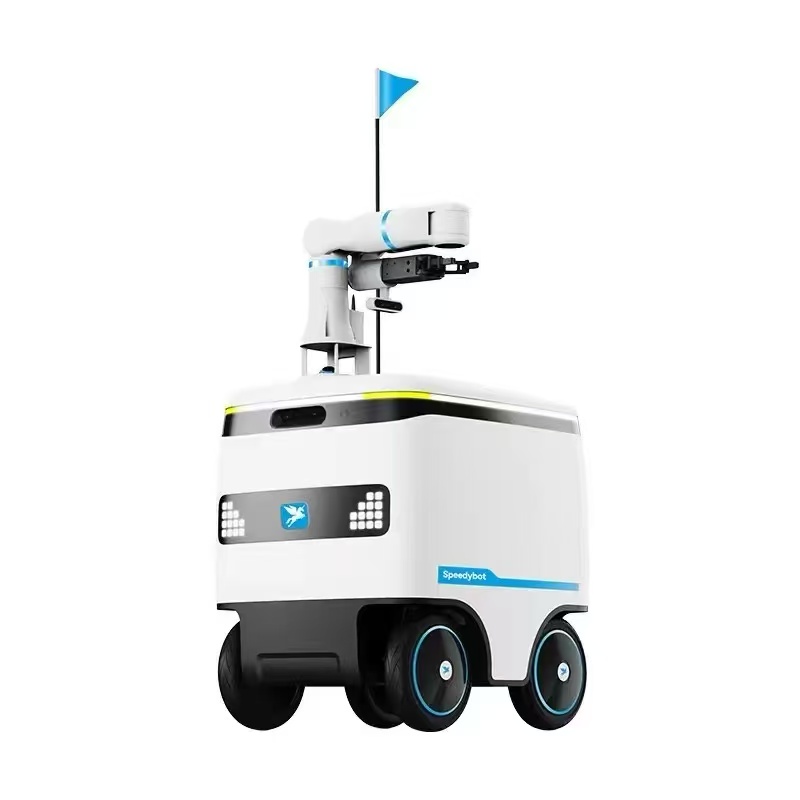
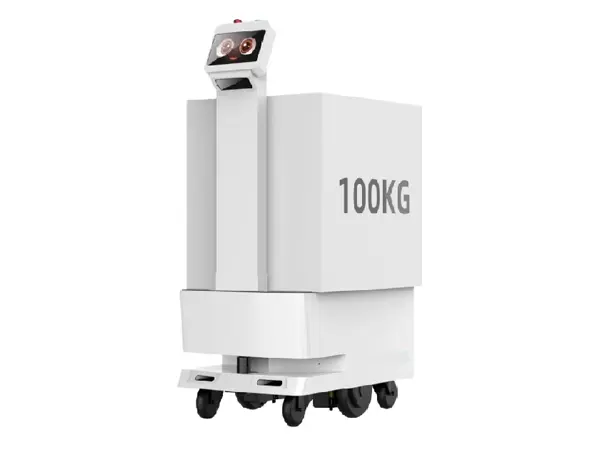
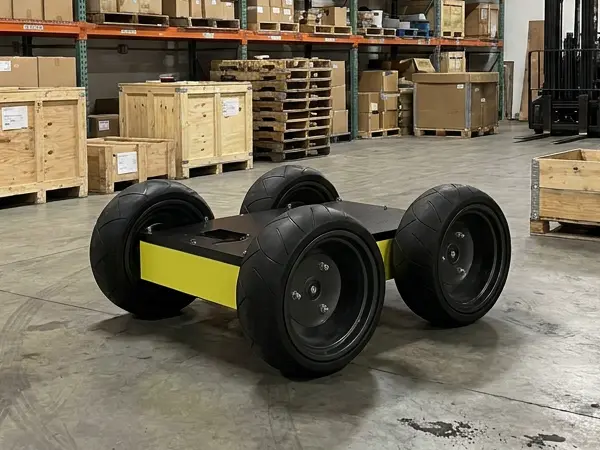
In warehouse and manufacturing logistics, BLDC motors are the dominant drive solution, representing nearly half of the AGV drive motor market. They are typically paired with planetary gearboxes to multiply torque at the drive wheel, delivering reliable traction for small-to-medium AGV platforms with 50–500 kg payloads. Most modern BLDC controllers also support regenerative braking, which recovers kinetic energy during deceleration to further extend battery runtime for multi-shift operations.

Mobile Robot Chassis

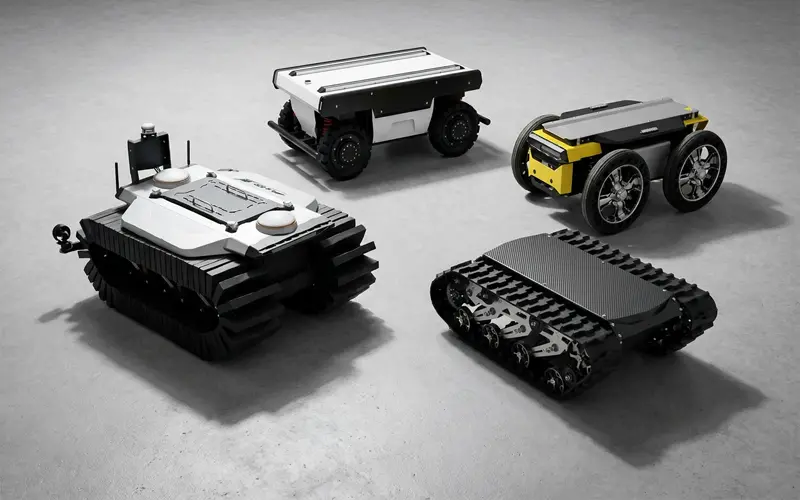
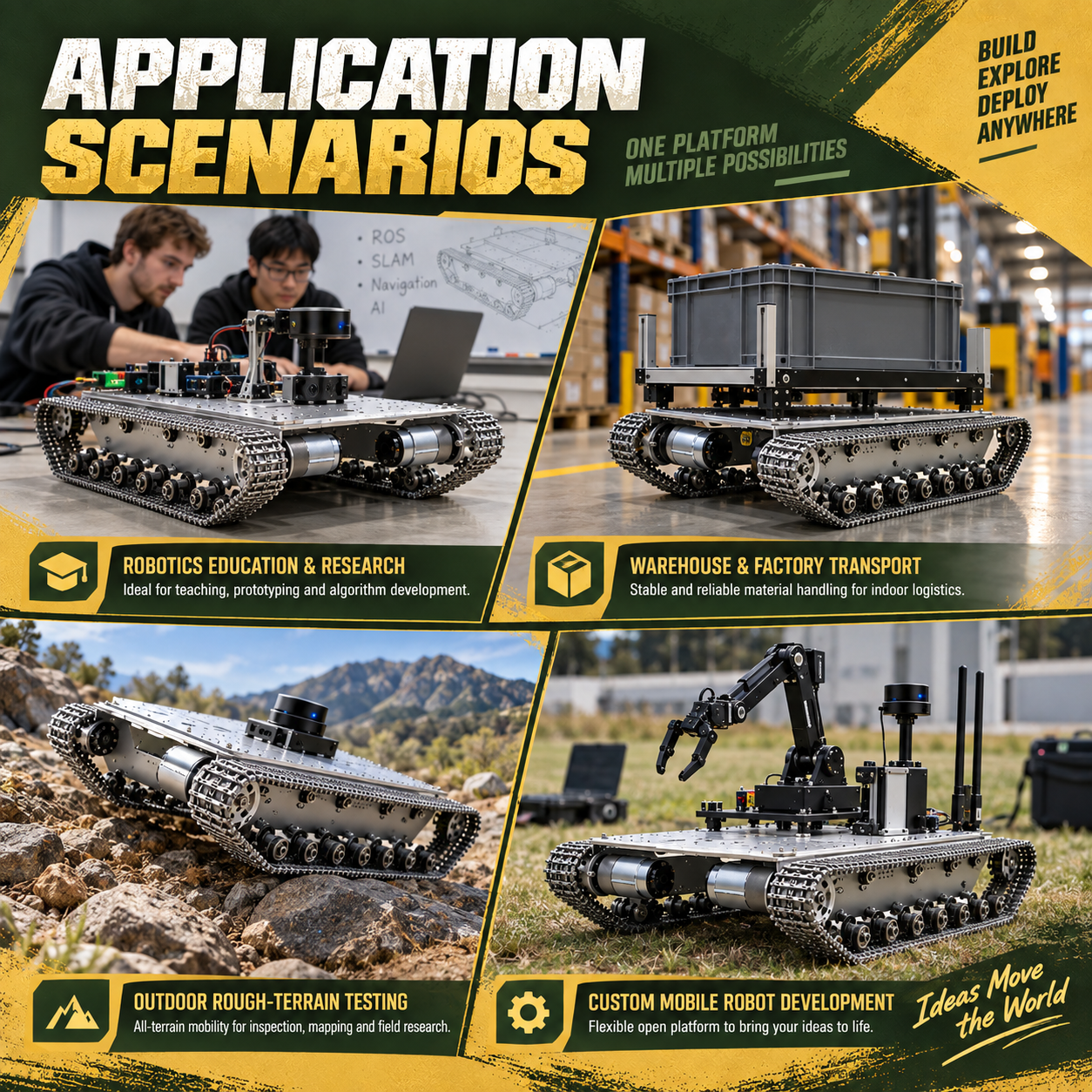
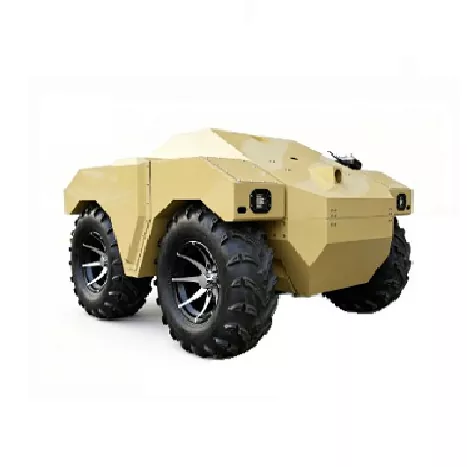
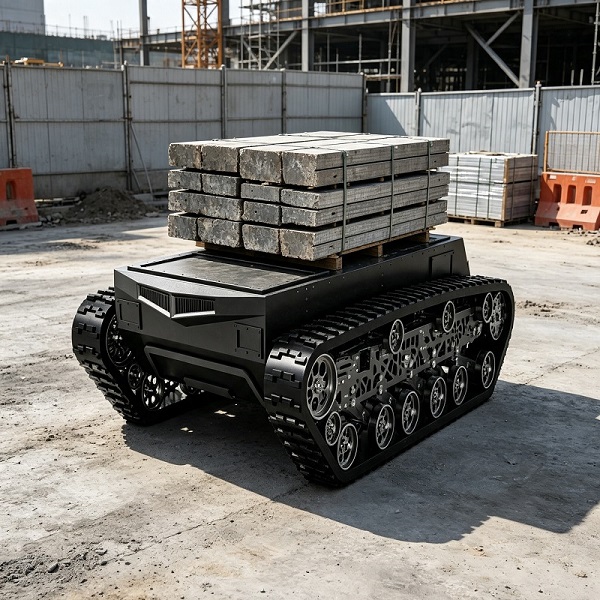
For general-purpose service robot chassis, inspection robots and industrial mobile robots, BLDC motors provide the compact torque density needed to fit within limited chassis space. Standard frame sizes including 42mm, 56mm and 80mm align with common mechanical design envelopes, while Hall sensor and encoder feedback options support closed-loop position control for precise navigation.

Robotic Lawn Mowers

For outdoor residential and commercial robotic lawn mowers, BLDC motors power both the wheel drive and cutting blade systems. Their brushless design avoids spark generation and resists dust and moisture ingress better than brushed alternatives, while high efficiency maximizes mowing coverage per battery charge — a key purchasing factor for end customers.

How to Select the Right BLDC Motor for Your Project

Load profile and duty cycle: determine whether the motor will run under constant, variable or cyclical load, and calculate required starting torque, operating speed and daily runtime. A motor sized outside its optimal efficiency range will overheat and fail prematurely.

Voltage compatibility: match the motor winding to the system battery bus (common options include 12V, 24V, 36V and 48V). No-load speed scales directly with supply voltage for a given winding design.

Environmental conditions: for outdoor equipment such as lawn mowers, verify temperature rating and ingress protection. With standard Class B insulation systems, industrial BLDC motors support continuous winding temperatures up to 120°C, far exceeding the thermal limits of brushed motors and ensuring stable performance in demanding industrial environments.

Control and feedback requirements: heavy-load AGVs typically require sensored BLDC motors with Hall effect sensors for smooth zero-speed startup, while light-duty systems may use sensorless designs to reduce component cost.

Custom BLDC Motor Solutions for Specialized System Designs

For professional manufacturers with in-house production capabilities, full parameter customization is standard practice. Adjustable specifications include:

Electrical parameters: voltage rating, no-load speed, stall torque and winding configuration

Mechanical parameters: mounting dimensions, shaft diameter, shaft length and flange type

Integration options: integrated gearboxes, encoders, brake units and connector types

Customization allows system designers to optimize motor performance exactly to their chassis and load requirements, rather than compromising with off-the-shelf specs. Reputable manufacturers support projects from prototype iteration through to mass production, with engineering teams collaborating directly with customer technical teams to validate performance.

Quality Assurance: Standard Testing for Industrial BLDC Motors

Reliable performance in the field depends on structured validation during manufacturing, and responsible manufacturers run standardized tests for every production unit:

Load and torque testing: verifies output torque and speed match rated specifications across the operating range

Temperature rise testing: measures winding and housing temperature under continuous full-load operation to ensure thermal stability

Noise and vibration testing: confirms acoustic and mechanical performance meets application requirements

Electrical safety testing: validates insulation resistance, dielectric strength and phase continuity

Related News
Leave me a message
Email
info@tjwdhk.cn
Address
Room 3025, Building 1, Zone F, Guangxuan Road, Airport International Headquarters Base, Dongli District, Tianjin City, China
X
We use cookies to offer you a better browsing experience, analyze site traffic and personalize content. By using this site, you agree to our use of cookies. Privacy Policy
RejectAccept