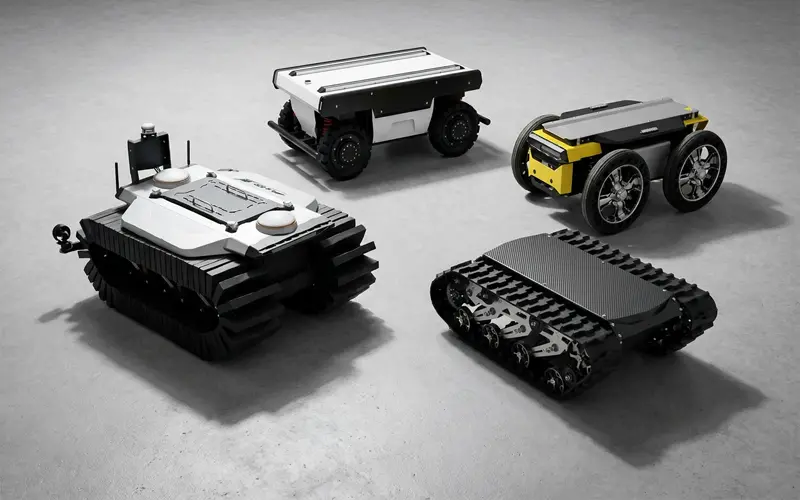
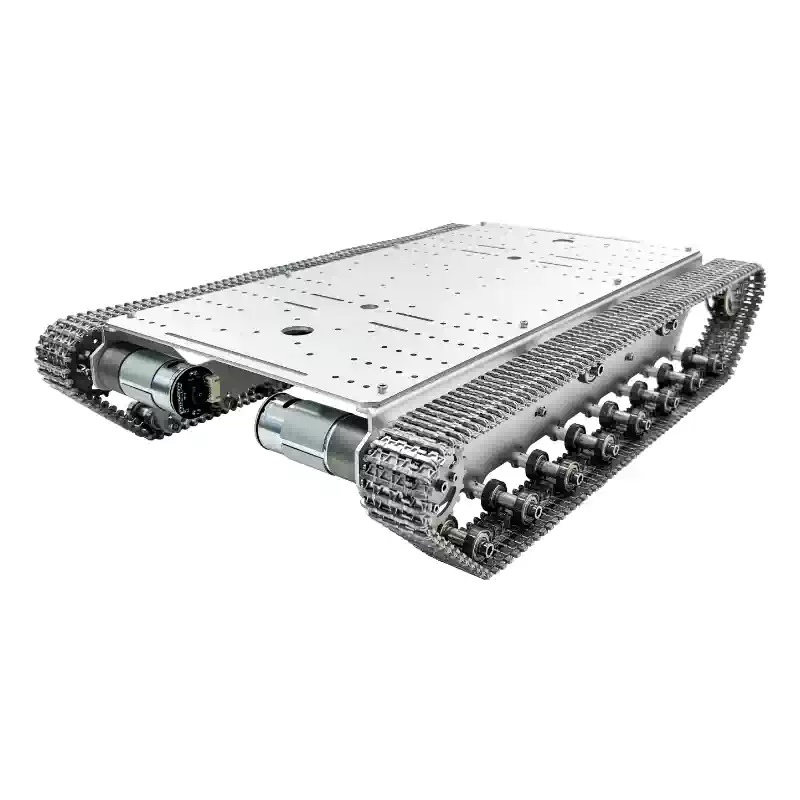
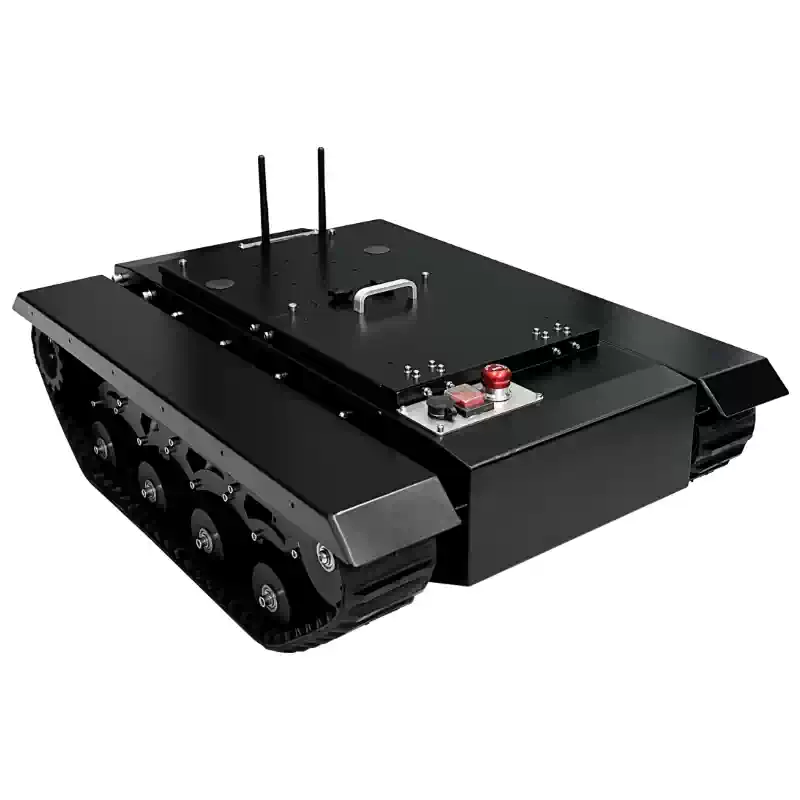
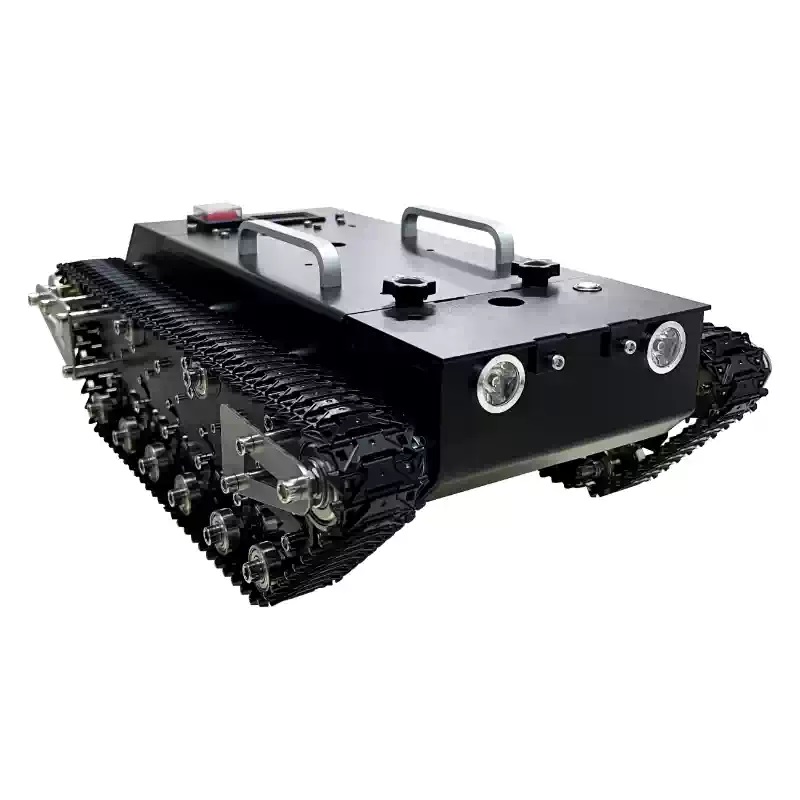
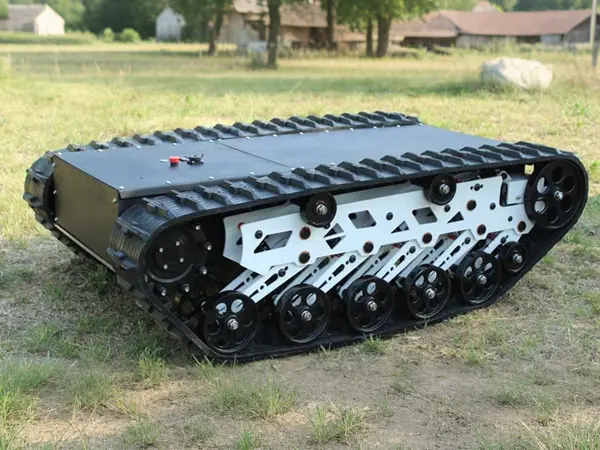
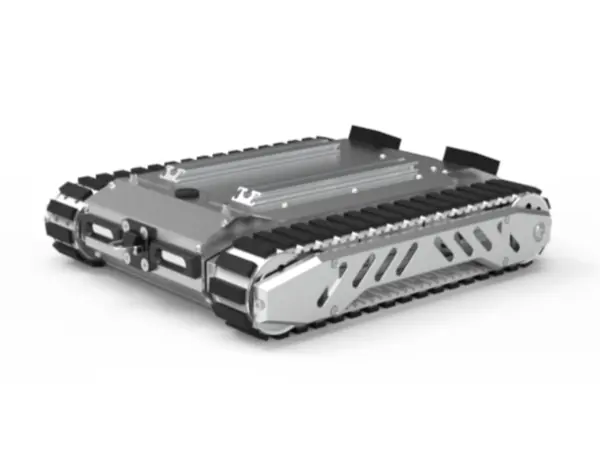
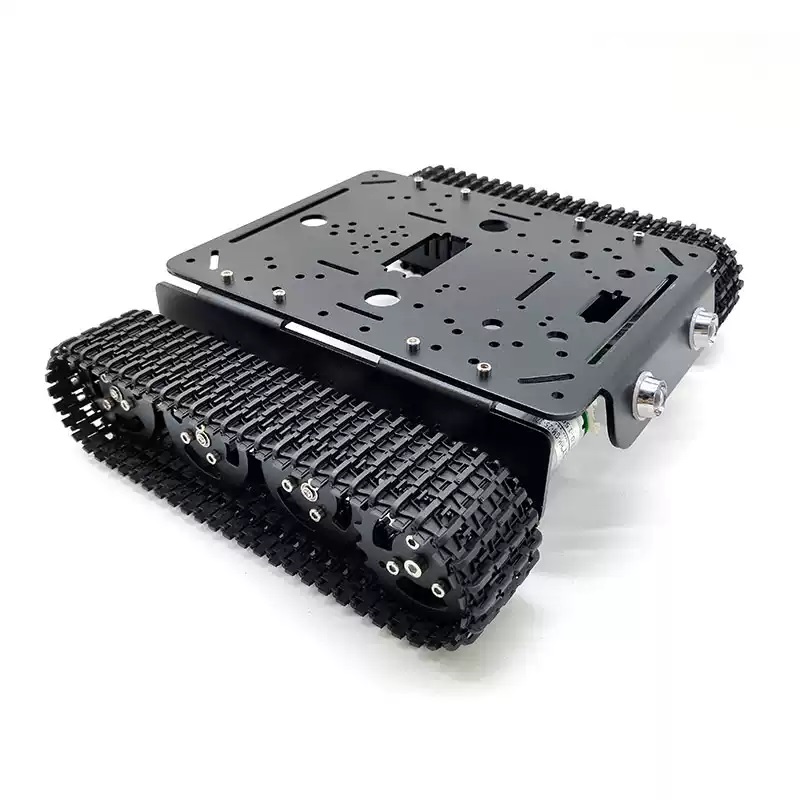
For robotics researchers, university lab teams and system integrators, the biggest concern when selecting an educational tracked chassis is not only mechanical structure, but software openness, ROS compatibility and how easy it is to carry out secondary development. A closed chassis with limited software resources will delay research progress and increase integration workload.
Our educational tracked chassis is designed for open development. It supports mainstream ROS and ROS2 distributions, provides open SDK, standard communication protocols and complete documentation for algorithm verification, autonomous navigation, sensor fusion and custom robot project development.
ROS & ROS2 Software Compatibility
Many research teams ask whether the tracked chassis can run on specific ROS versions. This educational tracked chassis supplies ready-to-use ROS Noetic and ROS2 Humble driver packages. Prebuilt ROS packages support velocity control, odometry output, TF broadcasting and differential skid-steer kinematics. Users can directly launch nodes in RViz for visualization and parameter tuning.
The chassis offers URDF model files out of the box. Researchers can import the URDF into Gazebo or Isaac Sim to run simulation tests before physical deployment, reducing hardware testing risk.
Interfaces for Secondary Development
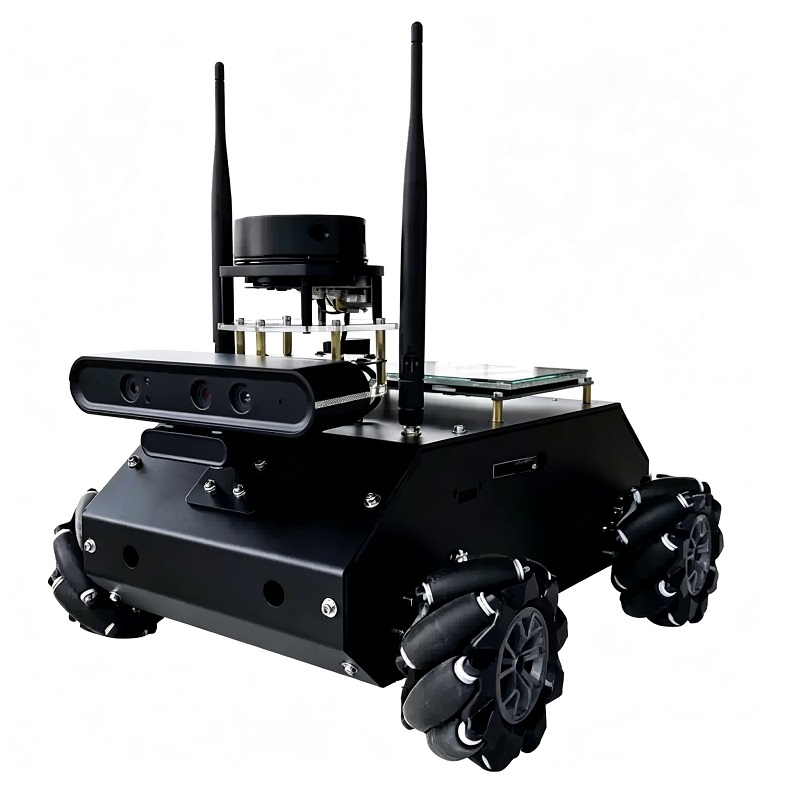
Stable communication is critical for integrators. This tracked chassis supports CAN bus, RS485 and serial port communication. Developers can connect single-board computers including Raspberry Pi, Jetson Nano and Jetson Orin. Python and C++ examples are provided, so teams can quickly write custom control logic without reverse engineering low-level firmware.
Power isolation design separates motor drive circuits from sensor and computing modules, which reduces electromagnetic interference when LiDAR, IMU and cameras are mounted for navigation research.
Common Secondary Development Scenarios for Research & Integration
University STEM research projects: SLAM, path planning, obstacle avoidance algorithm verification
Education lab courses: robot kinematics, mobile robot control and ROS teaching
Prototype verification for outdoor small inspection robots
FAQ
Q1: Does this educational tracked chassis come with ready-to-use ROS2 drivers?
A: Yes. We provide open ROS2 Humble driver, launch files and URDF. It works with standard ROS2 control stack and nav2 navigation package.
Q2: Can I modify the chassis firmware and do deep secondary development?
A: Low-level control protocol is open. You can send speed commands and read encoder/IMU data. Core firmware source is available upon technical agreement for qualified research teams and integrators.
Q3: What programming languages are supported for development?
A: Python and C++ sample codes are supplied. Most ROS developers use Python for fast prototyping and C++ for high-performance control modules.
Q4: Is odometry reliable for SLAM on tracked platform?
A: Tracked skid steering naturally brings odometry drift from track slip. The chassis outputs encoder and IMU data; researchers need to fuse LiDAR or visual information to improve localization accuracy. This is a common characteristic of tracked mobile platforms.
Q5: Do you provide technical support during development?
A: We supply datasheets, wiring guides, ROS tutorials and engineering support for integrators and academic buyers. We do not develop custom algorithms for end users, but we help resolve chassis driver and communication issues.
Q6: Can I mount LiDAR, camera and other sensors on this tracked chassis?
A: Reserved mounting holes and extended power ports are ready for external sensors and computing hardware. Payload limit must follow chassis specification.
We use cookies to offer you a better browsing experience, analyze site traffic and personalize content. By using this site, you agree to our use of cookies. Privacy Policy